

- By Garet Conrad
- June 10, 2026
- Home Maintenance
Roof Maintenance in the Lehigh Valley: Catch Small Problems Before They Leak
Roofs rarely fail all at once. They fail a little at a time — a cracked bead of sealant here, a low spot that holds water there — until one day a stain shows up on the ceiling. By that point, the cheap fix is long gone.
The good news: most roof problems give you plenty of warning if you know what to look for. This guide covers the warning signs we see most often on Lehigh Valley properties, a simple seasonal checklist you can run twice a year, and a clear line for when to stop and call a professional.
Why Lehigh Valley Weather Is Hard on Roofs
Roofs in our region get worked hard year-round. Winter brings snow loads, ice, and the freeze-thaw cycles that pry open small cracks and turn them into big ones. Spring brings heavy rain that finds every weak seam. Summer heat bakes roofing materials and dries out sealants. Then fall drops leaves into gutters and drains right before the freeze starts the cycle again.
That cycle is exactly why a twice-a-year check matters here more than in milder climates. A roof that looked fine in October can come out of a Pennsylvania winter with real damage.
Don't Forget Your Flat and Low-Slope Roofs
When people picture roof maintenance, they picture shingles. But a lot of Lehigh Valley properties have flat or low-slope roof sections too — porch roofs, additions, garages, and nearly every commercial building in the area.
Flat roofs need their own kind of attention. Water doesn't run off them quickly the way it does on a pitched roof, so drainage is everything. Rooftop equipment like HVAC units adds penetrations and seams — every one of them a spot where water can eventually find a way in. If you own a small commercial building or your home has a flat-roofed addition, these areas deserve a closer look than the shingles do.

Warning Sign #1: Standing Water
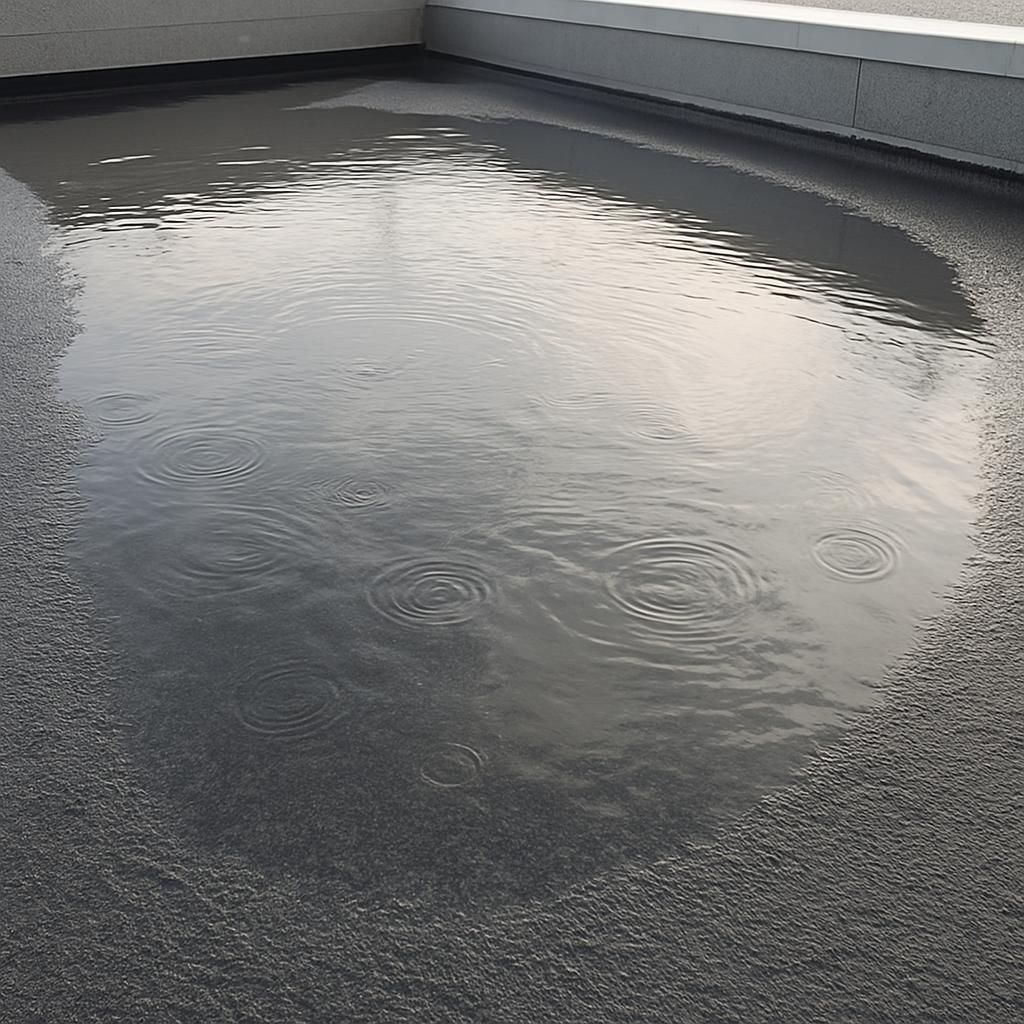
On a flat or low-slope roof, water should drain off within a day or two after rain. When it doesn't — when you see the same puddle in the same spot after every storm — that's called ponding, and it's a problem worth taking seriously.
A common rule of thumb: if water is still standing on a flat roof about two days after the rain stops, the drainage needs attention. Standing water adds weight, breaks down roofing materials faster, and keeps pressure on every seam it touches. The fix might be as simple as clearing a clogged drain — or it might mean correcting a low spot before it gets worse.
Warning Sign #2: Failed Flashing and Cracked Seals
Flashing is the material that seals the joints — where the roof meets a wall, a chimney, a vent pipe, a skylight, or the curb under a rooftop unit. It's also where most leaks actually start. The roof surface itself usually isn't the weak point. The transitions are.
Look for sealant that has cracked, pulled away, or crumbled. Look for dark staining or deterioration where a vertical surface meets the roof. On older roofs, the roofing material near these joints often breaks down first because water concentrates there.
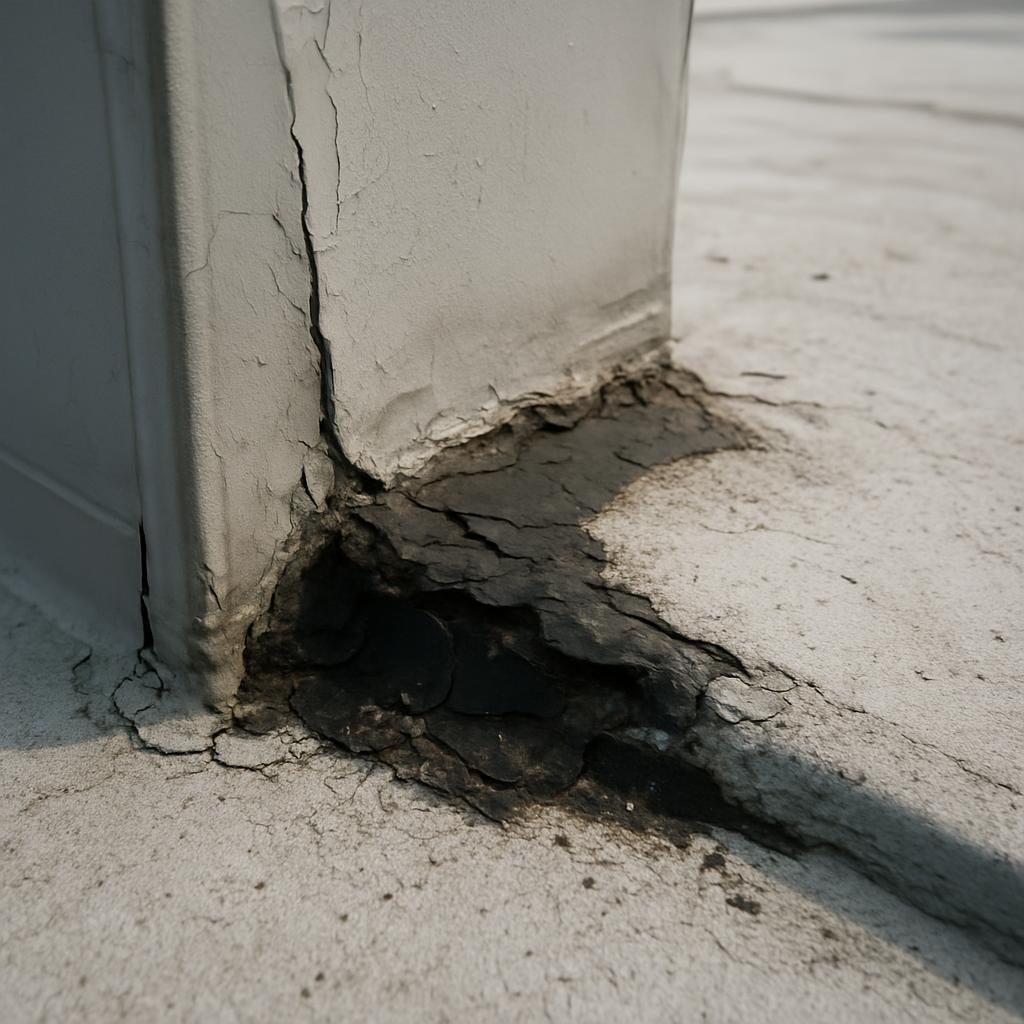
This is the kind of damage that costs little to repair when it's caught early and a lot when it isn't. Water that gets past failed flashing doesn't stay at the roof — it travels into insulation, framing, and drywall before you ever see it inside.
Warning Sign #3: Worn and Bald Spots
Roof surfaces wear unevenly. On flat roofs, you'll see patches where the protective surface has worn thin, blistered, or bubbled. On shingle roofs, the equivalent is granule loss — check your gutters for an unusual buildup of gritty sand-like material, and look for shingles that appear smooth or shiny compared to their neighbors.
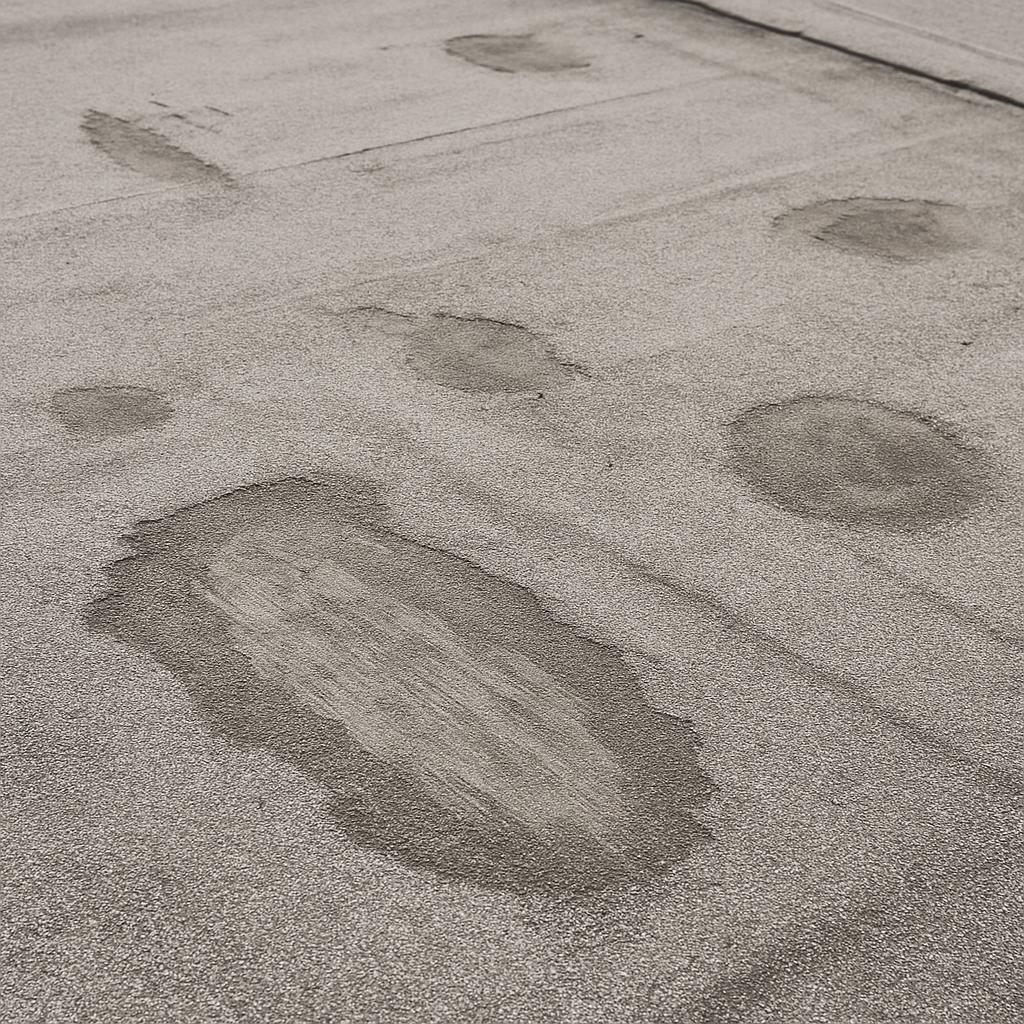
Worn spots don't leak right away. But the protective layer is what keeps sun and water from reaching the material underneath, and once it's gone, deterioration speeds up fast. A roof with spreading wear patches is telling you where it's going to fail next.
Your Twice-a-Year Roof Checklist
You don't need to climb on your roof to do most of this. Binoculars from the ground, a look from an upstairs window, and a walk through the attic cover a lot. Here's what to check each spring and fall:
Spring (after the freeze ends):
- Check ceilings and attic spaces for new stains, damp insulation, or musty smells
- Look for shingles that are cracked, curled, or missing after winter storms
- Scan the flashing around chimneys, vents, and skylights for gaps or lifted edges
- On flat sections, look for ponding water a day or two after a good rain
- Make sure gutters and downspouts survived the winter attached and aligned
Fall (before the freeze starts):
- Clear leaves and debris from gutters, downspouts, and flat-roof drains
- Trim back branches hanging over the roof
- Check sealant around vents, skylights, and rooftop equipment before ice can work into cracks
- Look for worn or blistered patches on flat sections while repairs are still easy to schedule
- After the first hard rain, confirm water is moving through the downspouts and away from the foundation
When to Call a Professional
There's a clear line here: anything you can check from the ground, a window, or the attic is fair game. Walking on the roof itself is not worth the risk — that goes double for steep pitches and wet or icy surfaces.
Call a professional when:
- You've spotted any of the three warning signs above
- A storm with high winds or hail has come through, even if nothing looks wrong from the ground
- Your roof is 15 or more years old and hasn't had a professional inspection recently
- You're buying or selling a property and need to know the roof's real condition
A professional inspection catches what ground-level checks can't — soft spots in the decking, seams that are starting to separate, and drainage problems that only show up when someone is actually on the roof measuring where the water goes.
The Math on Waiting
Here's the pattern we see over and over: the flashing repair that would have been a quick service call becomes a section of saturated insulation, stained drywall, and framing that needs attention. Water damage never stays where it starts. Every season a known problem waits, the repair gets bigger.
Roof maintenance isn't about paranoia. It's about two short checks a year and acting on what you find while the fix is still small.
Conrad's Roofing Services
Conrad General Contracting has been serving Lehigh Valley homeowners and businesses since 2014, with PA HIC registration #PA154190. Our roofing services cover inspections, repairs, and full replacements — and because we're a full-service general contractor, we can also handle any interior damage a leak leaves behind.
Seen one of these warning signs on your roof? Contact Conrad General Contracting at (610) 801-0000 to schedule an inspection. Catching it now is the cheap version of this repair.
Tags:Home Maintenance